


Want to explore the complete topic? Read our main guide: [Non Destructive Concrete Testing Equipment: Methods, Applications, and Equipment Selection].
Choosing non destructive concrete testing equipment should begin with the engineering question, not with a product catalogue or the highest specification on a datasheet. The right equipment must match the concrete condition, testing objective, required accuracy, field environment, applicable standard, data-management requirements, and the level of interpretation expected from the final results.
What Should Be Defined Before Choosing Non Destructive Concrete Testing Equipment?
The first step in selecting non destructive concrete testing equipment is to define exactly what the inspection needs to determine. "Testing concrete" is too broad to be a useful purchasing requirement. An engineer may need to assess concrete uniformity, estimate in-place strength, locate internal features, investigate possible defects, determine thickness, or monitor changes over time. These objectives require different measurement principles.
This distinction matters because NDT instruments generally do not measure every concrete property directly. A particular instrument may measure rebound response, ultrasonic pulse velocity, electromagnetic reflection, impact response, or another physical parameter. The engineering interpretation is then developed from that measurement.
A practical equipment-selection process should therefore begin with a simple chain: engineering question → measurable physical parameter → suitable NDT method → required equipment → verification procedure.
|
Engineering requirement |
What should be considered first |
Equipment-selection priority |
|
Concrete strength estimation |
Relationship between NDT response and strength |
Correlation capability and reference testing |
|
Concrete uniformity survey |
Repeatability across multiple locations |
Consistent measurement and data recording |
|
Internal defect investigation |
Expected defect type and depth |
Detection principle and penetration capability |
|
Structural thickness investigation |
Plate geometry and expected thickness |
Suitable wave-based measurement range |
|
Long-term condition monitoring |
Repeatability of location and measurement |
Data storage and repeatable test procedure |
|
Large-area field inspection |
Survey speed and site access |
Portability, battery life and data acquisition |
This approach prevents a common purchasing mistake: selecting equipment because its brochure lists a high resolution or many software functions without first confirming that the instrument actually measures the property required by the project.
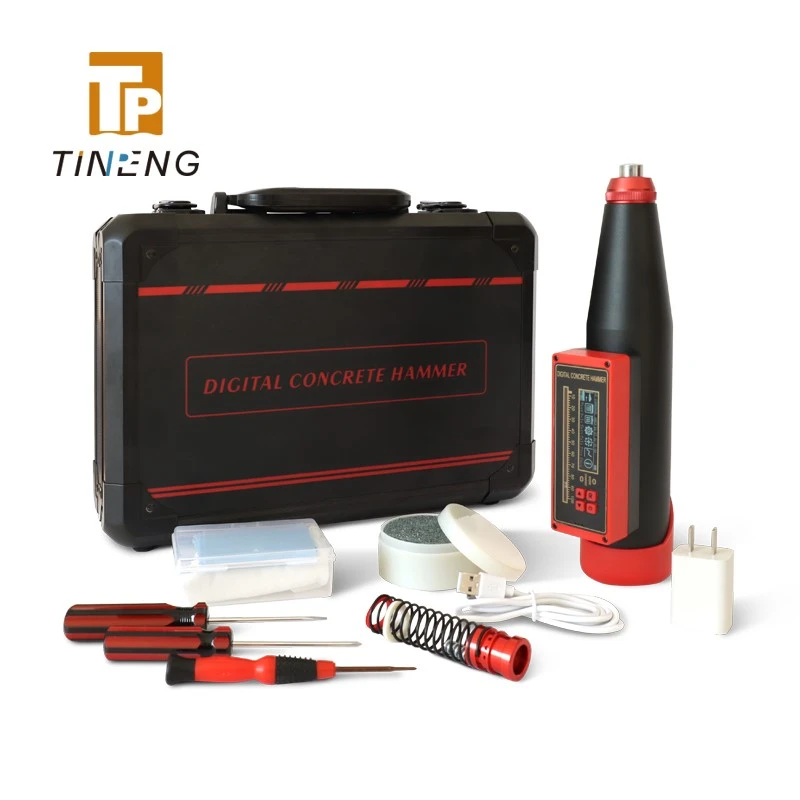
The equipment image should show the actual instrument and its accessories rather than a generic construction scene, allowing buyers to understand what is included in a complete field-testing system.
How Does the Testing Method Determine the Right Concrete NDT Equipment?
Once the inspection objective is defined, the next question is which physical principle can provide the required information. This is more important than comparing brands at the beginning of the purchasing process.
For example, ultrasonic pulse velocity is concerned with the propagation of longitudinal stress waves through concrete. ASTM C597-22 states that the method can be used to assess uniformity and relative quality, indicate voids and cracks, evaluate crack repairs, and monitor changes in concrete properties. The standard also notes that concrete saturation affects pulse velocity and that a velocity-strength relationship can be established for a particular concrete when appropriate paired measurements are available.
Impact-echo equipment has a different purpose. ASTM C1383-23 covers procedures for determining the thickness of concrete slabs, pavements, bridge decks, walls, and other plate-like structures. It uses P-wave measurements and reflected-wave frequency to determine thickness, so equipment selection must consider the geometry and acoustic conditions of the structure.
The implication for buyers is straightforward: an instrument should be selected because its measurement principle fits the engineering problem, not because it is described generally as "advanced NDT equipment."
Match the Equipment to the Concrete Structure
The structure itself should be considered before selecting equipment. A relatively thin concrete slab, a thick foundation, a bridge deck, a wall, and a heavily reinforced structural member can present very different measurement conditions.
Expected thickness, reinforcement density, surface accessibility, moisture condition, surface coatings and the presence of other embedded materials may all affect the suitability of a particular technique.
For field projects, the physical dimensions of the equipment also matter. A system designed for laboratory-style controlled measurements may be less practical when hundreds of square metres need to be surveyed on an active construction site.
Match the Equipment to the Required Information
The final report should also influence equipment selection. If the project only requires a relative comparison between locations, simple and repeatable data collection may be sufficient. If the results will be incorporated into an engineering assessment, the system may need more comprehensive data storage, traceable test locations, digital records, export functions and software for reviewing measurements.
This is where a technically appropriate but operationally unsuitable instrument can create problems. A device may perform the basic measurement correctly but still create unnecessary work if the collected data cannot be efficiently organized into the project's reporting system.
How Important Are Measurement Range, Accuracy, and Resolution?
Technical specifications are often the most visible part of an equipment catalogue, but they need to be interpreted carefully.
Measurement range tells the user where the equipment is designed to operate. Resolution tells the user how finely the measurement is displayed or recorded. Accuracy describes how closely the measured value corresponds to the accepted reference value under defined conditions. These are different characteristics and should not be treated as interchangeable.
For NDT equipment, the situation becomes even more complicated because the instrument may measure one physical quantity while the engineer ultimately wants to estimate another.
For example, ultrasonic pulse velocity is not automatically equivalent to compressive strength. ASTM C597-22 permits the development of a velocity-strength relationship for a particular concrete, but the relationship must be established using appropriate specimens and measurements rather than assumed to be universal.
Therefore, a buyer should ask the supplier not simply "What is the accuracy?" but rather:
|
Question |
Why it matters |
|
What physical quantity does the instrument directly measure? |
Establishes what the raw result actually represents |
|
Under what conditions is the stated accuracy valid? |
Prevents incorrect interpretation of datasheet values |
|
What reference standard is used for verification? |
Helps evaluate instrument consistency |
|
Is a concrete-specific correlation required? |
Important for quantitative strength estimation |
|
How are abnormal readings identified? |
Helps distinguish measurement error from real defects |
|
Can raw data be stored and exported? |
Important for traceable reporting |
A professional supplier should be able to explain these points rather than simply providing a single accuracy number.
What Field Conditions Should Be Considered When Choosing NDT Equipment?
Laboratory conditions are controlled. Construction sites and existing structures are not.
Temperature, moisture, surface roughness, accessibility, electrical interference, mechanical vibration and background noise can influence certain NDT measurements. ASTM C597-22, for example, specifically identifies concrete saturation as a factor affecting ultrasonic pulse velocity. ASTM C1383-23 also identifies mechanical noise and certain electrical noise conditions as limitations for impact-echo testing.
This means that an equipment specification should be evaluated together with the intended field environment.
Consider Portability and Power Requirements
For site inspection, battery operation, equipment weight, probe or sensor handling, display visibility and setup time can directly affect productivity.
A system that takes significantly longer to configure may become inefficient on a large inspection project, even if its laboratory measurement performance is excellent. Conversely, a highly portable instrument may be preferable for repeated surveys across multiple structures.
The equipment case should also be considered. Field NDT equipment is often transported between projects, and sensors, cables, calibration accessories and protective components need to remain organized and protected during transportation.
Consider Surface Accessibility
A technically suitable NDT method may still be difficult to apply if the sensor cannot maintain the required contact or scanning movement.
Before purchasing, engineers should consider whether testing will be performed on horizontal slabs, vertical walls, overhead surfaces, irregular concrete, finished surfaces, or areas with limited access. These practical details can determine whether the equipment will actually be used effectively after purchase.
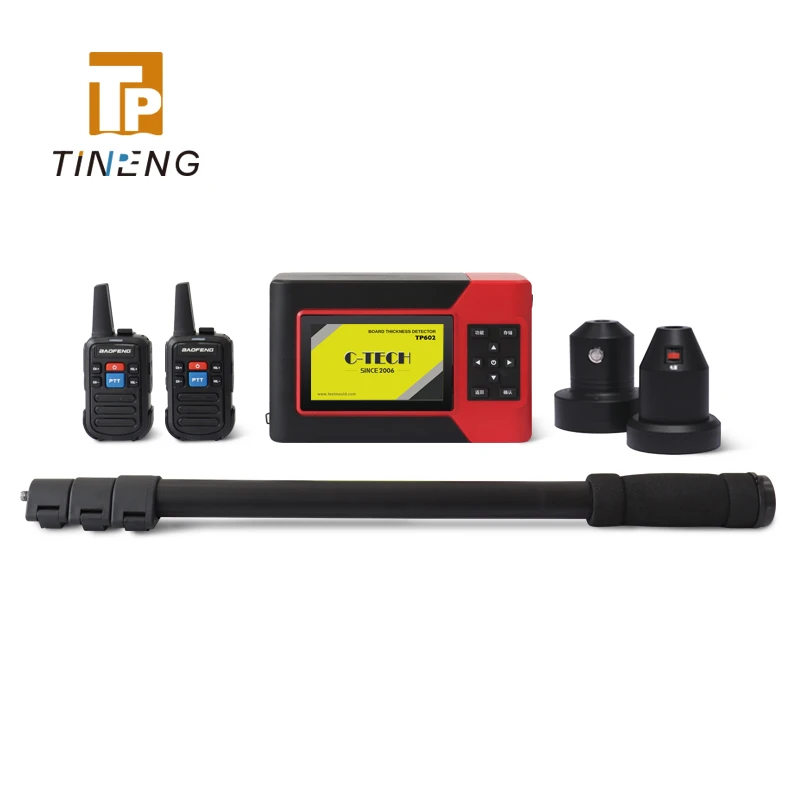
For field equipment, portability is part of practical performance. A well-organized case and complete accessory set can significantly reduce setup time and the risk of missing critical components during site work.
Why Are Calibration and Verification Important When Buying NDT Equipment?
Calibration should be considered before purchasing rather than after the instrument arrives.
An NDT instrument can only produce meaningful measurements when its sensing system and measurement chain are functioning correctly. However, calibration does not automatically guarantee that an NDT reading can be converted into a universally accurate concrete-strength value.
The buyer should therefore distinguish between instrument verification and concrete-specific correlation.
Instrument verification checks whether the equipment performs correctly against an appropriate reference. Concrete-specific correlation determines how the measured NDT response relates to the actual property of the concrete being investigated.
For ultrasonic testing, ASTM C597-22 notes that measurement accuracy depends partly on accurately determining the distance between transducers and precisely measuring pulse transit time. The standard also identifies reinforcement and specimen geometry as factors that can affect measurements.
This provides a practical purchasing lesson: a good NDT instrument is only one part of a reliable measurement system. Accessories, calibration references, software, operating procedures and trained personnel all contribute to the final result.
How Important Are Software and Data Management in NDT Equipment?
Modern non destructive concrete testing equipment increasingly includes digital displays, internal memory, communication interfaces and data-processing software. These functions are valuable, but buyers should evaluate them according to the actual workflow rather than the number of features listed in a brochure.
For a small inspection, manual recording may be manageable. For hundreds or thousands of measurements, however, manual transcription introduces additional opportunities for errors. Digital data storage, measurement identification, export functions and structured reporting can significantly improve traceability.
Look at the Complete Data Workflow
A useful equipment evaluation should follow the data from the moment the sensor collects the measurement through to the final report.
The operator should be able to understand how measurements are stored, how individual test locations are identified, how abnormal readings are handled, whether original data can be retained, and how results are exported for further analysis.
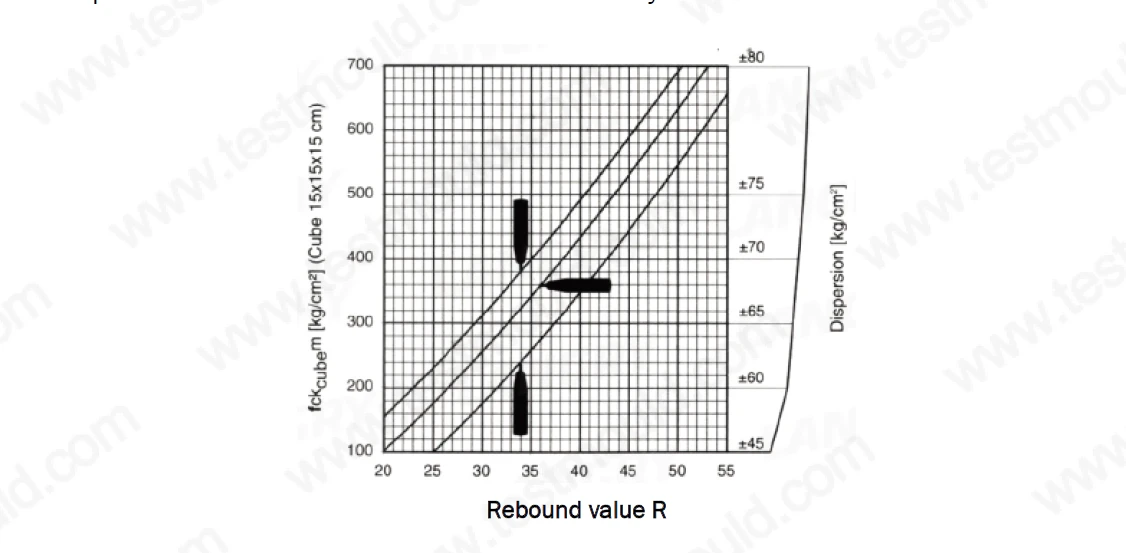
Software should support engineering interpretation rather than simply make the interface look more sophisticated. A clear data workflow is particularly important when many measurements must be reviewed and reported.
How Should Applicable Standards Influence NDT Equipment Selection?
Applicable standards should be identified before purchasing equipment, not after the equipment has arrived.
Different standards may define different testing procedures, measurement conditions and reporting requirements. ASTM C597-22 addresses ultrasonic pulse velocity, while ASTM C1383-23 addresses impact-echo measurements for concrete plates. These standards demonstrate why a generic statement such as "suitable for concrete NDT" is not sufficient when a project has a specific testing specification.
The same principle applies to European standards. The equipment should be checked against the actual standard and test procedure specified by the project rather than assuming that every instrument in the same product category is technically equivalent.
For buyers working with international projects, this is particularly important because the project specification may reference ASTM, EN, BS, ISO or local standards. The supplier should be able to identify which standard the equipment is designed to support and provide the relevant technical documentation.
What Should Buyers Check About CE Marking and Compliance?
CE marking should be considered separately from testing accuracy.
For products covered by applicable EU harmonisation legislation, CE marking indicates that the manufacturer has completed the required conformity process and declares conformity with the applicable legal requirements. The European Commission explains that manufacturers are responsible for identifying applicable legislation, carrying out the conformity assessment, preparing technical documentation, issuing the EU Declaration of Conformity and affixing the CE marking where required.
Therefore, buyers should not treat "CE certificate" as a synonym for product accuracy or laboratory calibration. CE marking concerns legal conformity under applicable EU legislation; it does not replace a calibration certificate, performance verification, or project-specific technical qualification.
Buyers can consult the official European Commission CE marking guidance when reviewing CE-related documentation.
How Should Buyers Evaluate a Concrete Testing Equipment Supplier?
Equipment selection is not only a comparison between instruments. It is also a comparison between technical support systems.
For professional laboratories and inspection companies, installation guidance, operating manuals, spare parts, calibration support, software assistance, training and after-sales communication can directly affect the useful life of the equipment.
This is particularly important for NDT because measurement interpretation is often more complicated than simply pressing a button and reading a number. Operators need to understand the physical principle, test limitations and factors that may affect the measurement.
Tianpeng's broader product range covers Concrete Testing Equipment, Universal Testing Machines, Cement Testing Equipment, Rock and Aggregate Testing Equipment, Asphalt Testing Equipment, Soil Testing Equipment, Material Testing Equipment, and General Equipment. The value of this broader range is that a testing laboratory can build a complementary testing system instead of treating one NDT instrument as an isolated solution.
Tianpeng also documents practical overseas technical training. In a 2026 Philippines GPR training program, its engineers covered equipment assembly, wireless communication, calibration, parameter adjustment, field scanning, data collection and radar-profile interpretation rather than limiting support to equipment delivery.
This illustrates an important purchasing criterion: when the equipment requires technical interpretation, training capability can be nearly as important as the instrument specification itself.
What Is a Practical NDT Equipment Selection Process?
A practical procurement process can be organized around the actual project workflow. First, define the structure and the engineering question. Next, determine what physical quantity must be measured and identify the applicable standard or project specification. Then establish the required measurement range, field conditions and data-management requirements.
Only after these requirements have been defined should different equipment models be compared.
|
Selection stage |
Main question |
|
Application |
What engineering problem must be solved? |
|
Measurement principle |
What physical response can answer that question? |
|
Standard |
Which ASTM, EN, BS, ISO or project procedure applies? |
|
Structure |
What are the thickness, geometry and accessibility conditions? |
|
Environment |
What temperature, moisture, noise or surface conditions are expected? |
|
Measurement |
What range, resolution and repeatability are required? |
|
Data |
How will measurements be stored, analyzed and reported? |
|
Verification |
How will instrument performance be checked? |
|
Support |
What training, calibration and after-sales support are available? |
|
Compliance |
What documentation and market requirements apply? |
This sequence is more reliable than starting with a supplier catalogue and trying to find an application for an attractive instrument afterward.
Summary and Recommendations
Choosing the right non destructive concrete testing equipment is ultimately a process of matching the engineering question to the measurement principle. The equipment should then be evaluated according to the structure, test environment, required accuracy, applicable standard, calibration procedure, software capability, reporting workflow and technical support.
The most expensive instrument is not automatically the most appropriate one, and the instrument with the highest displayed resolution is not necessarily the instrument that will produce the most useful engineering information.
For professional projects, buyers should pay particular attention to the difference between direct measurements and interpreted results. They should also confirm how the equipment will be verified, how field conditions affect the measurement, how data will be stored, and whether the supplier can provide practical training and technical support.
A well-selected NDT system should therefore do more than collect numbers. It should produce measurements that can be understood, repeated, documented and incorporated into a defensible engineering assessment.
Frequently Asked Questions About Choosing Non Destructive Concrete Testing Equipment
What is the first thing to consider when choosing NDT equipment?
The first consideration should be the engineering objective. Determine whether the project requires strength estimation, uniformity assessment, defect investigation, thickness measurement, reinforcement-related information, or long-term condition monitoring. The appropriate measurement principle can then be selected.
Is higher measurement resolution always better?
No. Resolution only describes how finely an instrument displays or records a measurement. It does not automatically guarantee higher accuracy of the final engineering result, especially when the measured physical quantity must be correlated with another property.
Should NDT equipment comply with a specific testing standard?
Yes, when the project specification requires a particular standard. The buyer should verify that the equipment and its operating procedure are suitable for the required test method instead of relying on a general statement that the instrument is suitable for concrete NDT.
Why is software important when selecting NDT equipment?
Software becomes particularly important when a project involves a large number of measurements. Proper data storage, test-location identification, data export and reporting functions can improve traceability and reduce manual transcription errors.
What should I ask an NDT equipment supplier before purchasing?
Ask about the measurement principle, applicable standards, measurement range, accuracy and repeatability, calibration or verification procedure, field operating conditions, data storage and export, software, spare parts, training, technical support and conformity documentation. These questions provide a much more useful basis for comparison than price alone.
For more product information, technical specifications, or expert consultation on our advanced asphalt testing equipment, please contact our specialist team today at Tianpeng.